By Tobey MacCachran
Upper decky lip pillow, zynbabwe, and zyna-chino are just a few of my favorite words assigned to Zyn, the pouches that have become a mainstay in the mouths of nicotine-using Americans over the past decade. Offered in flavors like mint, citrus, and coffee and available in 3mg and 6mg strengths, Zyn’s were originally advertised as an alternative to traditional forms of smokeless tobacco (dip/chew).
Since their introduction into the American market in 2014, Zyns have risen to become the most used form of oral nicotine for young adults nationwide. This is partly due to the corner of the internet known as the manosphere, and partly due to the incessant advertising tactics employed by Philip Morris International, which has owned the company since 2022.
It is hard to discern the frat influencers that genuinely enjoy Zyn from the ones who are agents of big tobacco, but there is no doubt that the internet, and apps like TikTok, have allowed for the product to skyrocket in popularity. One study by the American Lung Association found a 641% increase in Zyn sales between 2019 and 2022.
While it would be irresponsible to suggest a causal relationship between social media use and Zyn sales, there is no doubt that moments like the Nelk Boys gifting Tucker Carlson a tire-sized container of Zyns and the ensuing internet fallout that saw the men revered for their broiness, hammer home the significance the internet has on the popularity of Zyn.
While nicotine use in the United States has never been outwardly political, the cultural framing of using products like Zyn has, in recent years, begun to draw political lines on a non-partisan issue.
Conservative states often have much laxer tobacco regulatory laws, and indeed, the top five states with the highest rates of smoking in the U.S. are red ones spread out across the Midwest and the Bible Belt. The states with the highest chewing tobacco and snus rates were similarly conservative and rural.
Despite these facts, there is a mixed bag of academic literature as to whether or not Republicans use tobacco products more, and there is just not enough conclusive evidence to suggest that they do. But, survey results from the Denison University student body suggest that perhaps Zyn use is drawn along political lines.
Two of the top youth tobacco use experts in the country, working out of Stanford University, found that among young adults, almost 25% used Zyn pouches at least once in the past month, dwarfing the 11% use rate on Denison’s campus.
Across the board, Denison students use nicotine less than the national average. Fall 2024 data showed that nationally, 25% of college students vaped daily, compared to just 10% of Denison students who reported frequent use in a 2023 survey.
All of the polling data on student nicotine use at Denison comes from surveys conducted by Dr. Paul Djupe, director of Denison’s Data for Political Research program. Aside from the finding that Zyn use was low on Denison’s campus, Dr. Djupes’ data uncovered potential correlations between Zyn use and political affiliation.
Among Denison respondents to the April 2025 survey, American men were, unsurprisingly, the largest demographic of students using Zyn at 25%. And of those same men, the ones identifying as Democrats were the least likely to use Zyn, suggesting that, at least at Denison, Zyns were a product of polarity.
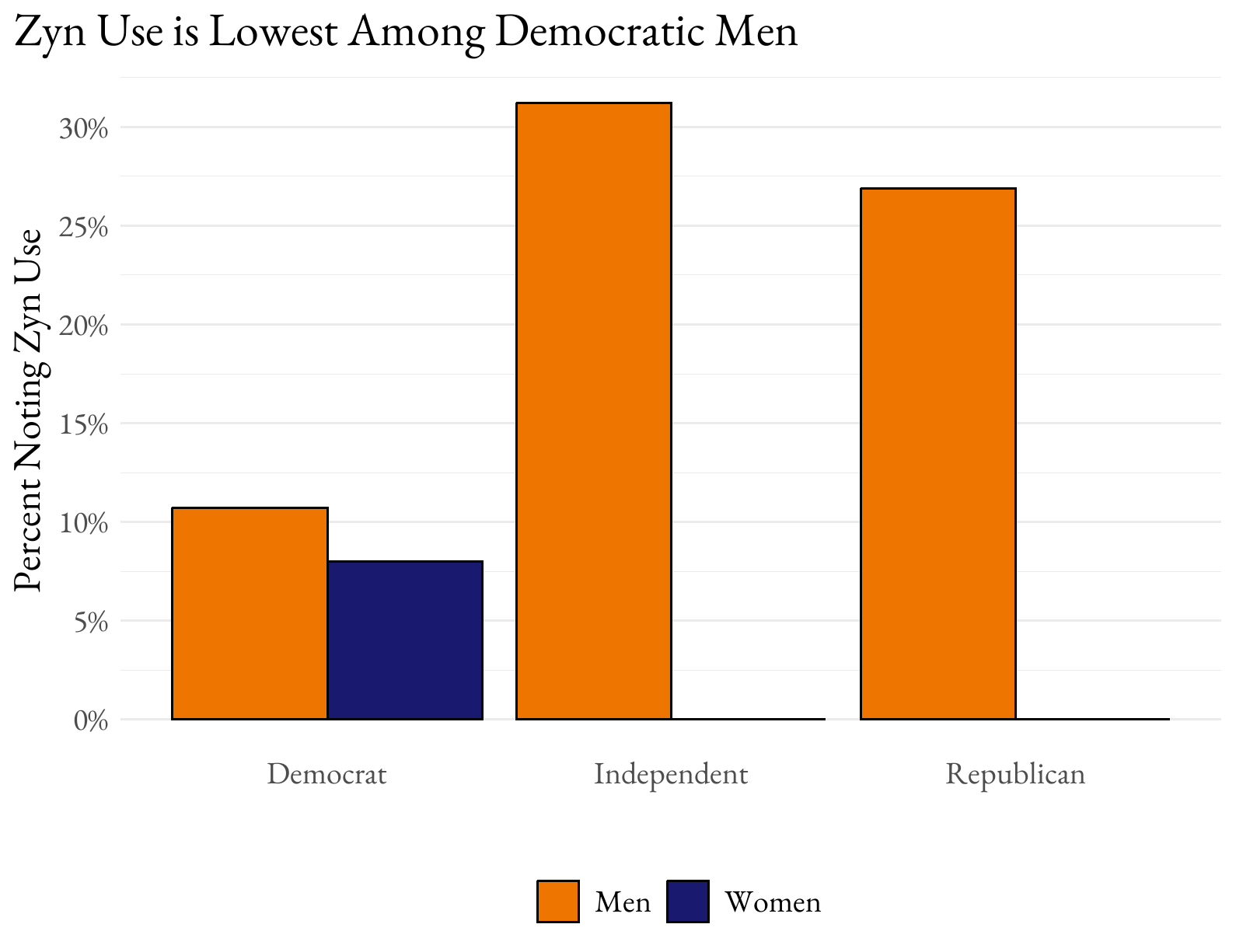
It would be inaccurate to assume that political sentiment on Denison’s campus, which swings around 68% Democratic, was the sole influence over such a low student Zyn use rate. But, at the same time this notion that Zyn use is a nicotine-coded dog whistle for members of the right is reinforced further by findings from the April survey.
One question focused on student levels of masculinity showed that not only were Republican men the most likely on campus to use Zyn, but that feelings of masculinity expressed by both male and female students also aligned with greater Zyn usage.
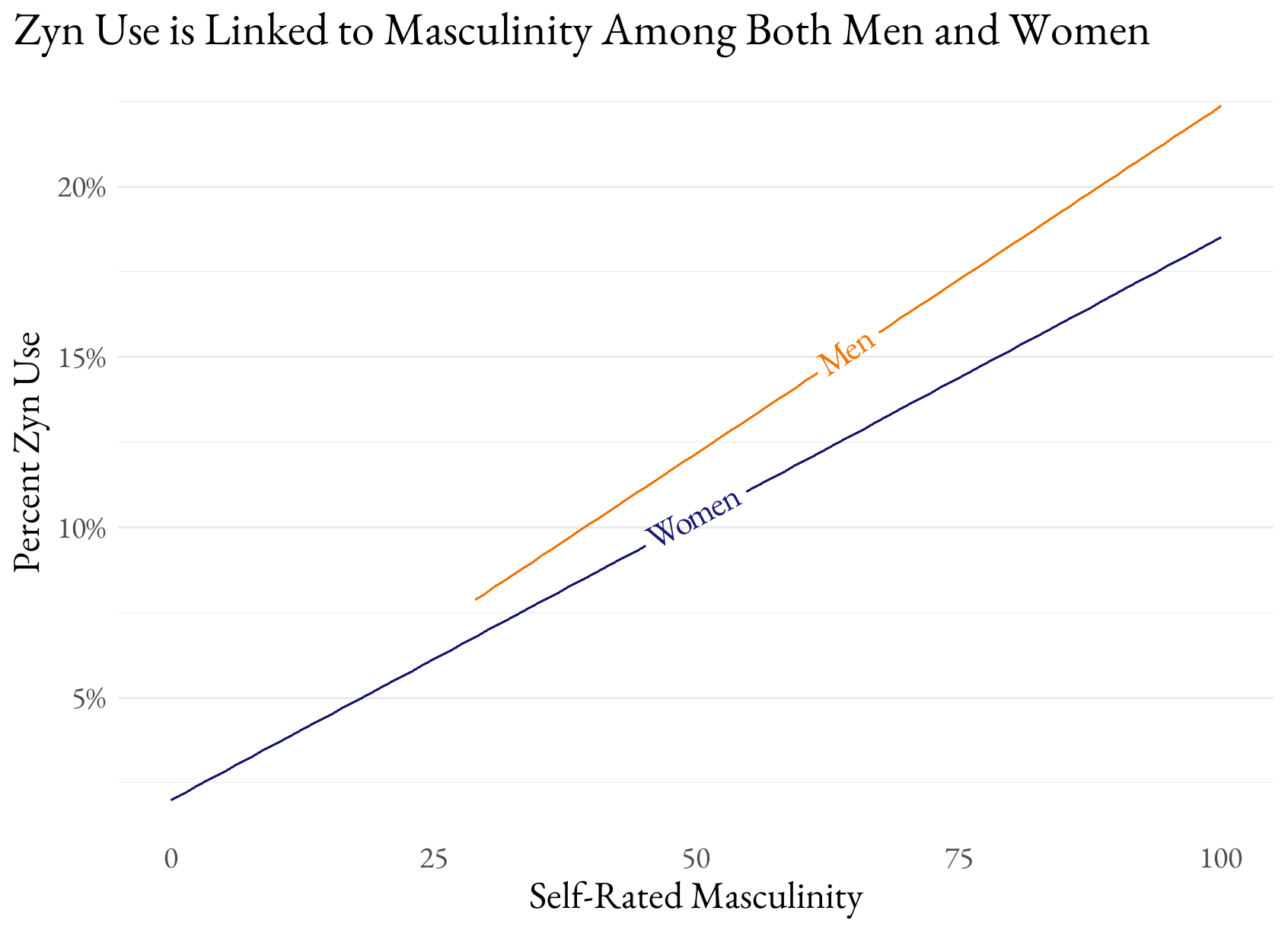
When you consider the wide array of internet figures who have embraced and promoted Zyn – the Barstool bros, the gun content guys, the Andrew Tate/red pill crowd, and even the country, blue-collar dudes—all of whom align with the right, it makes perfect sense why Zyn use has become more common among conservative men at Denison.
Our generation has grown up oversaturated with internet content that promotes habits and world views that become ingrained in our algorithms. Zyn may not come with a campaign sticker or a party pin, but in 2025, it’s become part of a larger aesthetic that, at least on Denison’s campus, correlates with political opinion.
Tobey MacCachran is a rising senior in the Journalism Department at Denison University. In his downtime, he likes to pretend that scrolling TikTok counts as “media research.”
 one twenty seven